
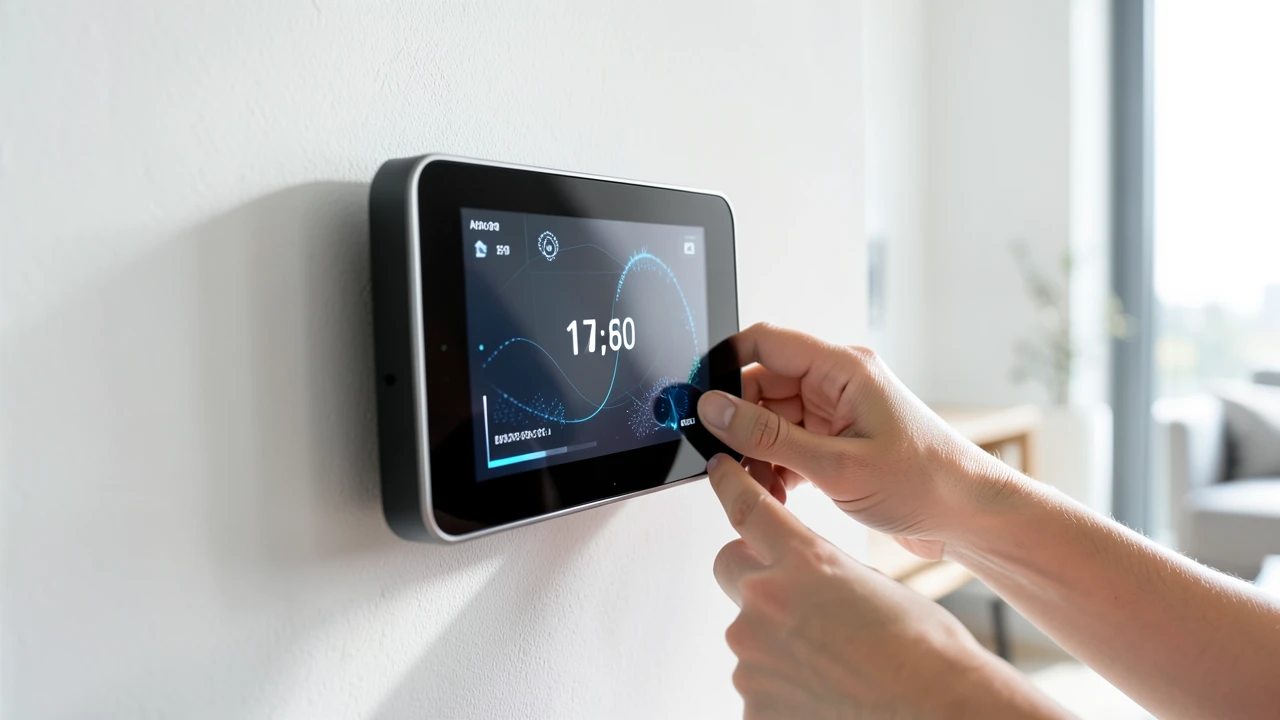
Planning a Smart Upgrade: Your DIY Smart Thermostat Replacement Checklist and Guide
It's exciting when you decide to take control of one of the most fundamental aspects of your home comfort-your climate control. The promise of modern smart technology, lower utility bills, and perfect indoor air quality is powerful. If you’ve been scrolling through guides and wondering if you can handle swapping out that old dial-style thermostat for a sleek, Wi-Fi-enabled model, you're not alone.
However, HVAC systems are complex machines, and while the initial swap may seem straightforward, success depends on more than just correctly identifying wires. Before you pull out a screwdriver or an online shopping cart, reading this guide will give you the full picture-the simple DIY steps, but also the crucial warning signs that point toward needing professional system diagnostics.
Why Smart Thermostats Are Game-Changers for Washoe Valley Comfort
Before we dive into the nuts and bolts of replacement, it’s important to understand why these devices are so much more than just digital dials. For homeowners in Washoe Valley-whose climate swings dramatically from intense summer heatwaves to sudden cold snaps-a smart thermostat is an investment in efficiency, not just aesthetics.
The core pain point most homeowners face isn't the temperature itself; it’s the unpredictable cost and effort of maintaining consistent comfort against fluctuating utility bills. Modern smart thermostats tackle this by moving beyond simple 'On/Off' scheduling. They manage energy use intelligently.
For example, consider "smart learning." This feature is what makes these devices true game-changers. Instead of requiring you to manually program a schedule for Monday through Friday, the thermostat observes your routine. It learns when the house needs maximum cooling during the day and automatically dials back-knowing you’ll be at work or running errands-to save money. When it senses your approach via geofencing (if supported), it begins pre-cooling or pre-heating so that when you walk through the door, the comfort is immediate.
Furthermore, modern smart systems can integrate with whole-home filtration and humidification units, addressing Indoor Air Quality (IAQ). Given the age of many beautiful homes in areas like Cedar Flat or Dollar Point, dust buildup and allergen concerns are common. A smart system doesn't just control temperature; it helps manage the air itself, protecting your family’s health year-round.
Now, if you are thinking, "Why not just replace my entire HVAC unit?" That is a big question, but we want to position this thermostat upgrade as an efficient first step. It significantly increases the intelligence and functional value of your existing system, ensuring that even if the core machinery is decades old, its control panel is modern, optimized, and maximizing efficiency.
The DIY Smart Thermostat Replacement Checklist: What You Need to Know
We understand you want to tackle this project yourself-and for simple replacements, it often is manageable! The goal of this section is to provide a genuine, foundational DIY smart thermostat replacement checklist and guide that builds your confidence while also ensuring you don't make an expensive mistake.
Basic Safety Checklist (The Non-Negotiables)
- Turn Off the Power: This is mandatory. Locate your main circuit breaker and switch off power to your HVAC system entirely. Nothing should be able to run when you are working on it.
- Identify Wiring Colors: Before disconnecting anything, take clear, detailed photos of every single wire connection point. Note the color and which terminal (R, W, Y, G, C) it connects to. These pictures are your insurance policy.
- Match Voltage Requirements: Check the thermostat's manual against your existing wiring setup. Some older homes may use different voltage standards than newer models assume.
The Critical Pitfalls and Compatibility Warnings
Here is where most DIY projects run into trouble, and it’s crucial to read this section carefully:
- The C-Wire Myth: Many smart thermostats require a continuous Common Wire (C-wire) connection for constant power (Wi-Fi, display screen). If your current setup doesn't have one, you cannot simply purchase any smart thermostat; you will need an adapter or professional wiring installation. Assuming all thermostats use the same C-wire is perhaps the biggest mistake homeowners make.
- System vs. Brain: Remember that a new brain (the thermostat) cannot fix a weak body (the underlying system). If your ducts are leaky, if your coils are heavily corroded, or if your compressor sounds overworked and inefficient, no amount of smart scheduling will solve the problem. These signs require an inspection of the actual HVAC unit.
- Know Your Model: Before buying anything, take pictures of your outdoor condenser unit's model number and serial plate. This information is vital for any professional who needs to check compatibility with Washoe Valley’s specific climate demands.
If you follow these steps, you can successfully complete the swap itself. But if you notice multiple issues-such as visible corrosion on the wires or unusual noises coming from the unit's indoor air handler-it is time to pause and call in a professional for an underlying system assessment. This caution isn't meant to scare you; it’s meant to protect your investment and keep your home comfortable, which is exactly what our service aims to do.
When DIY Isn’t Enough: System Compatibility and Efficiency Checks
This section represents the pivot point-the moment where a homeowner realizes that while swapping the thermostat was easy, the system behind it requires expert attention. This transparency is key because we want you to make the best long-term decision for your family's comfort and budget.
Understanding Your System’s True Efficiency
When considering efficiency, don't just look at how old the unit is; look at its ratings. We use analogies that are much easier than technical jargon: think of SEER (Seasonal Energy Efficiency Ratio) as an HVAC system’s version of a car's MPG rating. A higher SEER means the unit gets more cooling output for every unit of electricity it consumes, making it far more efficient and reducing those shocking utility bill spikes. Similarly, HSPF rates measure heating efficiency.
If your current ratings are significantly below what modern standards require, simply adding smart scheduling is like putting new tires on a car with a blown engine-it won't fix the core problem. This deep dive into metrics helps homeowners understand why an overall system replacement might be necessary despite their initial interest in a minor DIY swap.
The Importance of Invisible Maintenance: Ductwork and Airflow
One of the most overlooked sources of high energy bills is not the unit itself, but the ductwork leading from it. Over time, ducts develop leaks, tears, or simply lose their seal integrity. These drafts-often invisible to the naked eye-allow conditioned air (heated or cooled) to escape into unconditioned spaces like attics or crawlspaces.
We often find that high energy use is actually a leaky ductwork problem, not an equipment efficiency problem. For instance, we recently worked on a beautiful older home in Kings Beach where the smart thermostat was perfect, but the HVAC unit still struggled during peak heat because the primary issue was decades of unsealed ducts. This simple lesson reinforces our signature perspective: The best home comfort starts with preventative maintenance, not an emergency repair call.
Navigating Washoe Valley’s Unique Climate Variability
Washoe Valley's climate is notorious for its variability. A system designed primarily for intense summer cooling might struggle when you experience a deep, sustained cold snap, and vice versa. This requires thoughtful modern solutions. When we assess your home, we consider whether a traditional ducted split system or an alternative like high-efficiency heat pumps or mini-splits would provide reliable, zoned performance across all seasons.
Beyond the Thermostat: Upgrading Your Whole Home Comfort System
Now that you understand the difference between controlling temperature (the thermostat) and managing efficiency (the whole system), let's talk about moving from a "fix" mindset to an "investment" mindset.
Ducted vs. Mini-Split: Finding the Right Fit
When upgrading, homeowners often face the decision between two major styles of climate control:
- Ducted Systems: This is the classic method where air travels through hidden ductwork across the entire house. It offers centralized, invisible control and is ideal for maintaining a consistent aesthetic.
- Mini-Split Systems (Ductless): These units are installed on walls and allow you to zone your comfort. If you have an office or a guest room that needs perfect temperature regardless of what’s happening in the rest of the house, mini-splits provide excellent, localized control without requiring complex ductwork overhauls.
Understanding which method best fits your life-do you want invisible centralized cooling (Ducted), or hyper-specific zone control for certain rooms (Mini-Split)-is crucial to selecting the right system that supports your family's lifestyle and modern aesthetic.
The Whole House IAQ Solution
We must bring IAQ back into focus, because it is not an add-on; it is a foundational element of health. A smart thermostat helps regulate humidity, but advanced filtration and dehumidification are entire systems in their own right. Investing in these components means investing in better respiratory health for your family. This holistic approach ensures that the air you breathe indoors is as clean and fresh as possible, regardless of what’s happening outside.
While we know a full system replacement is a big financial decision, when we break down the analysis-comparing the long-term ROI (Return on Investment) from energy savings vs. the cost of frequent emergency repairs-the investment in efficiency quickly pays for itself.
Getting Started with Peace of Mind in Washoe Valley
The process of upgrading your home comfort system can feel overwhelming, filled with technical terms and daunting costs. But remember this: our job isn't just about fixing a machine; it's about being reliable neighbors who show up on time in Cedar Flat or Dollar Point, ready to help you breathe easy.
Our signature approach is built around trust and transparency. We specialize in navigating the complexity of modern systems-from simple DIY smart thermostat replacement checklist and guide steps to complex full HVAC system replacements-always focusing on showing you the value and efficiency improvements, not just the sticker price.
When you are ready for that peace of mind, we recommend a comprehensive professional system assessment or tune-up. This low-pressure first step allows us to look at your unit’s actual condition, inspect your ductwork integrity, review your current smart thermostat setup (if applicable), and provide you with a clear, jargon-free roadmap of options-whether it's simply sealing up some leaks or recommending an entire system upgrade.
Don't wait for the unexpected breakdown during a heatwave or cold snap to act. If you suspect your bills are climbing without adequate comfort, let us help you investigate. Call us today at +1 775-490-8107 and let our specialized Washoe Valley experts determine if your home is ready for its smart upgrade. Smart Thermostat Installation. AC Replacement. Furnace Replacement. Duct Replacement & Sealing. Home.